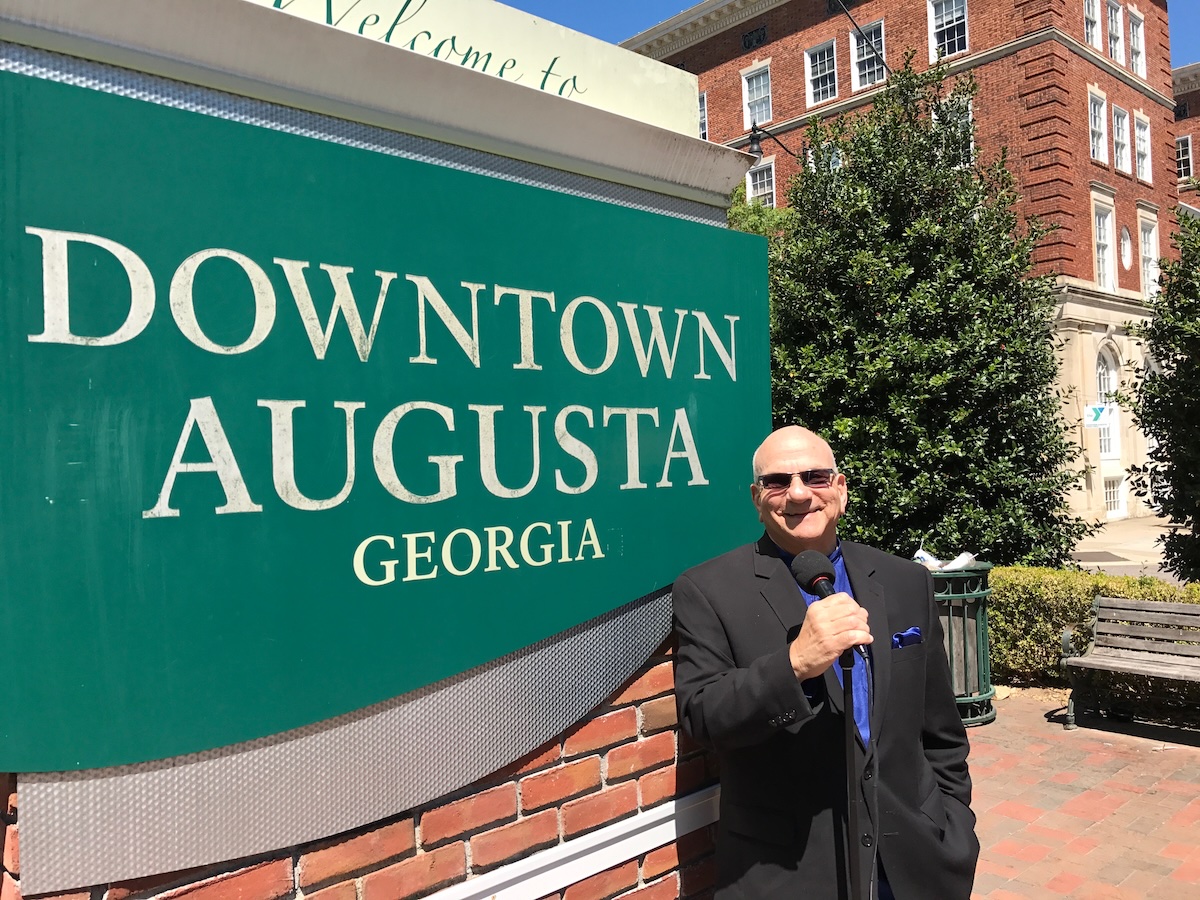
Bryan “Dub” Axelson is one of the most recognizable voices in the CSRA. If you’ve spent any time here, chances are you’ve tuned in to Kicks 99 and started your day with Dub and his crew on the air.
What you might not know is that his radio career wasn’t planned or the fulfillment of a dream. It started with a phone call. Dub still smiles when he thinks about how everything unfolded.
Today, over two decades later, Dub hosts one of the most popular radio shows in the CSRA, The Kick Wake Up Krew.
From Wrestleboy to Dub
It all started when Dub was 12 years old. One early morning, during the show that would eventually be his, Chuck, the host and a wrestling fan, got a wrestling fact incorrect.
Dub, a wrestling fan, couldn’t let that go. He called the station to set the record straight. Chuck challenged him to call back the next morning and answer three trivia questions. Dub nailed them. It earned him a spot as the show’s official “wrestling reporter,” and the nickname “Wrestleboy.”
From that day forward, Dub would call in periodically to provide wrestling updates. But it wasn’t till he was 16 that he became an employee. At the time, he figured it was just a way to make some extra money. Instead, it turned into his career and the only job he has ever had.
“It’s still surreal when I think about it,” he says. “I went from being a kid on the phone to being the one running the show. I never planned this, but I can’t imagine doing anything else.”
Over the years, as “WrestleBoy” got older, he became WB, and eventually “Dub.” That name—along with his voice—has become a morning companion to thousands across the CSRA.
The Man Behind the Mic
Hosting an early morning show is not as easy as it might sound. Dub’s alarm goes off at 3:30 a.m., and by 4:30, while most of us are still sleeping, he’s already at the studio. From the moment he walks in until the red “On Air” light clicks on, he’s preparing for the day’s show.

He likes a well-planned show. But Dub isn’t chasing perfection—he’s after real, natural conversation. “We don’t use a script,” he explains. “We want it to feel like you’re sitting in on a real conversation. Our listeners are part of our family.”
That family connection shows up everywhere. Listeners greet him in grocery store aisles. Sometimes they recognize him by voice alone. And more than once, he’s come home from a ticket stop carrying baby gifts from listeners who felt like they were welcoming his daughter as one of their own.
Sharing the Highs and the Heartbreaks
Part of what makes Dub so relatable is his willingness to open up and share his life—not just the fun part. He and his wife, Kelsey, have shared their journey with infertility, IVF, and the birth of their first and second daughter.
Dub didn’t hold back in sharing the heartbreak story of losing his youngest daughter, Isla. As a father, I can’t begin to imagine a heavier sorrow than losing a child.
“At first, it felt so personal,” he admits. “But then I realized—someone out there listening might be going through the same thing. If our story makes them feel less alone, it’s worth sharing.”
When they lost Isla, the grief was crushing. But even in sorrow, the community rallied. Strangers shared their own stories of loss. Listeners sent letters and prayers. “It reminded us we weren’t alone,” Dub says. “And that’s why we keep sharing—the good and the bad. Because life isn’t just sunshine and rainbows.”
But Dub and Kelsey are not the kind to give up. They continued on their journey to have another child. Kelsey made her wishes clear in her prayers: she wanted another daughter. And so, they continued with IVF treatments.
After several failed attempts, the couple decided they would try one more time. If that didn’t work, they would accept whatever came next.
In one of life’s most unexpected turns, Kelsey became pregnant naturally. And to their surprise, it was a girl. “It was one of those moments where you realize God’s plan is bigger than yours,” Dub reflects.
More than Music
Dub is forever grateful for the opportunities this job has given him. It’s brought him face-to-face with some of country music’s biggest names. He’s swapped stories with stars like Kane Brown and Morgan Wallen long before their rise to the top.
Dub recounted the one remarkable encounter with Garth Brooks, who once turned a quick meet-and-greet into a long conversation and sent Dub home with a bag full of merchandise.
And opportunities don’t stop at meeting country stars. In 2019, he got to play at the Augusta National. An experience he will never forget. He recalls saying a prayer under his breath before swinging, “All I wanted was to get [the ball] down the fairway,” he laughs. “And I did — I’ll never forget that feeling.”
Rooted in Augusta
While other radio personalities chase national syndication, Dub finds meaning in staying local. “We play the same music as national shows, but what makes us different is that we live right here. We sit in the same traffic, shop at the same stores, and cheer at the same games. Our listeners know us because we’re their neighbors.”
Not to say he wouldn’t be open if the opportunity was right. But that local bond has carried him through more than two decades in the business — and earned him and his team three CMA Station of the Year awards along the way.
But for Dub, the biggest award isn’t a trophy. It’s the feeling that every morning, people across Augusta invite him into their kitchens, cars, and commutes — not just as a radio host, but as family.
“Radio gave me my career, but the community gave me my purpose,” he says. “And as long as they’ll have me, I’ll keep showing up.”
Conclusion
Dub’s life in radio may have started with a single phone call, but what has kept him here for more than two decades is connection. To his listeners, to his family, and to his community.
His journey proves that when you stay true to yourself, the impact can echo far beyond the airwaves.

Comments (0)
No comments yet. Be the first to share your thoughts!
Leave a Comment