The Slow Collapse of American Higher Education
One warm afternoon last year, I was answering messages on LinkedIn when I decided to check my feed.
I was shocked when I came across a post from my alma mater.
Limestone University was nearing its 200th year. Seeing it close felt surreal.
Institutions like that feel permanent when you are a student. You assume they will outlive you.
Never again would I be able to walk the halls of those historic buildings. Or smell the nostalgic musk lingering in the main building. I would never be able to take my children there and show them where part of my story began.
The sad reality is that Limestone is not alone.
Many colleges have already joined them. And another wave may soon follow.
This week, I came across an NPR article that intrigued me.
The article discussed a report from Huron Consulting Group predicting that 370 private colleges in the United States could close or merge over the next decade.
The report pointed to shrinking student populations, financial stress, and demographic decline.
Those explanations certainly make sense. But when I reflected on my own years at Limestone, another factor became impossible to ignore.
Limestone Tuition
The very first class I took at Limestone was in the Fall of 2002.
Recently, I dug through some old paperwork and found a few payment slips.
In August 2002, I paid $475 for a 3-credit-hour class. That worked out to approximately $3,800 per year.
In the Spring of 2007, when I made my final payment, I paid $845 for a class with the same number of credit hours — approximately $6,760 annually.
Unfortunately, I cannot confirm the tuition numbers in between those years. I wish I could. But these two figures alone tell a compelling story.
Let’s take a moment to analyze the increase mathematically.
In just 4.5 years, tuition increased by 78%.
That is an astonishing number.
If we spread the increase year over year, it comes out to roughly 12.21% annually.
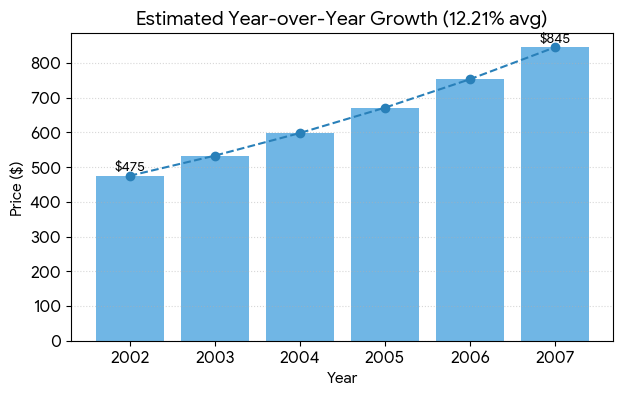
Twelve percent may not sound as dramatic as seventy-eight percent. But now let’s place it into context.
| Year | Avg. Inflation | Tuition Hike (Est.) | Excess |
|---|---|---|---|
| 2003 | 2.3% | 12.21% | 9.91% |
| 2004 | 2.7% | 12.21% | 9.51% |
| 2005 | 3.4% | 12.21% | 8.81% |
| 2006 | 3.2% | 12.21% | 9.01% |
| 2007 | 2.8% | 12.21% | 9.41% |
Data source: U.S. Bureau of Labor Statistics
That is a substantial increase above inflation.
If tuition had continued growing at the same pace, a single 3-credit-hour class at Limestone in 2025 would cost approximately $6,720.
Limestone was not alone in raising prices.
And it certainly was not alone in shutting its doors.
Expensive Higher Education
Unfortunately, the United States has one of the most expensive higher education systems in the world.
In many cases, earning a degree in the U.S. costs two to ten times more than it does in other countries.
| Country | Annual Tuition | Annual Living | Net 4-Year Cost | Verdict |
|---|---|---|---|---|
| U.S. Private | $45,000 | $15,000 | $110,000+ | Highest in world |
| U.S. Public (In-State) | $11,950 | $13,500 | $69,000 | High |
| UK (Home Student) | $12,110 | $13,500 | $71,000 | High |
| Canada (Domestic) | $5,650 | $10,000 | $56,000 | Moderate |
| Australia (HECS) | $6,500 | $14,000 | $58,000 | Moderate |
| Germany (Public) | $300 | $12,000 | $37,000 | Mostly living costs |
| Mexico (Public) | $50 | $6,000 | $28,000 | Nearly symbolic |
According to U.S. News & World Report, tuition and fees at private institutions in the United States average roughly $45,000 per year.
That means many students pay close to $180,000 for a four-year degree before accounting for interest.
Meanwhile, the National Average Wage Index in late 2025 sat at approximately $65,000 annually.
When I first started looking deeper into this issue, I realized there was one critical factor that needed to be addressed:
Return on investment.
Generally speaking, a college degree remains a strong career investment.
But not always.
And not all degrees carry the same economic value.
Consider medicine.
Primary-care physicians often graduate with debt approaching $300,000. Specialists such as orthopedic surgeons may eventually earn exceptionally high salaries, but many spend years buried under enormous financial obligations before reaching that level of income.
On the opposite end, someone entering the honorable profession of teaching may face one of the weakest financial ROI paths in the mainstream workforce despite the immense societal value teachers provide.
Conversely, engineering remains one of the strongest undergraduate bets in the United States.
According to NACE, engineering graduates from the class of 2025 are projected to enter the workforce with average starting salaries near $94,000 — substantially higher than many other career paths.
Is College Still Worth It?
In recent years, earning a college degree has become increasingly controversial.
Much of that skepticism stems from rising tuition costs and concerns about return on investment.
Today, many people genuinely ask:
Is college still worth it?
According to a survey from Pew Research, only 22% of Americans believe pursuing higher education is worth the time and money.
At the same time, earnings for young men without degrees have increased in recent years. And I suspect that trend may continue.
Still, education remains one of the most reliable catalysts for economic mobility.
It expands career opportunities. It increases earning potential. And for many people, it fundamentally changes the trajectory of their lives.
For me, the answer is still simple.
If I were graduating high school today, I would still do everything in my power to earn a college degree.
Not because every degree guarantees wealth. It does not.
Not because the system is healthy. Clearly, it is not.
But because education still opens doors that would otherwise remain closed.
The tragedy is not that fewer people value education.
The tragedy is that the cost of accessing it is pushing both students and institutions toward the breaking point.









Comments (0)
No comments yet. Be the first to share your thoughts!
Leave a Comment