The afternoon light filtered through the glass doors of Ubora Coffee Roasters on Jones Street. The morning rush had passed, replaced by the quiet rhythm of espresso pulls and low conversation. I stop in often to get my caffeine fix. But today, I’m here for more than my usual cup—I’m meeting the new owner, Randy Bradum, and talk about one of my favorite subjects: coffee.
From behind the counter, Brandum moves with deliberate precision as someone accustomed to operating in confined spaces. As he sees me approaching, he slides the freshly roasted beans into a bag and comes to greet me.
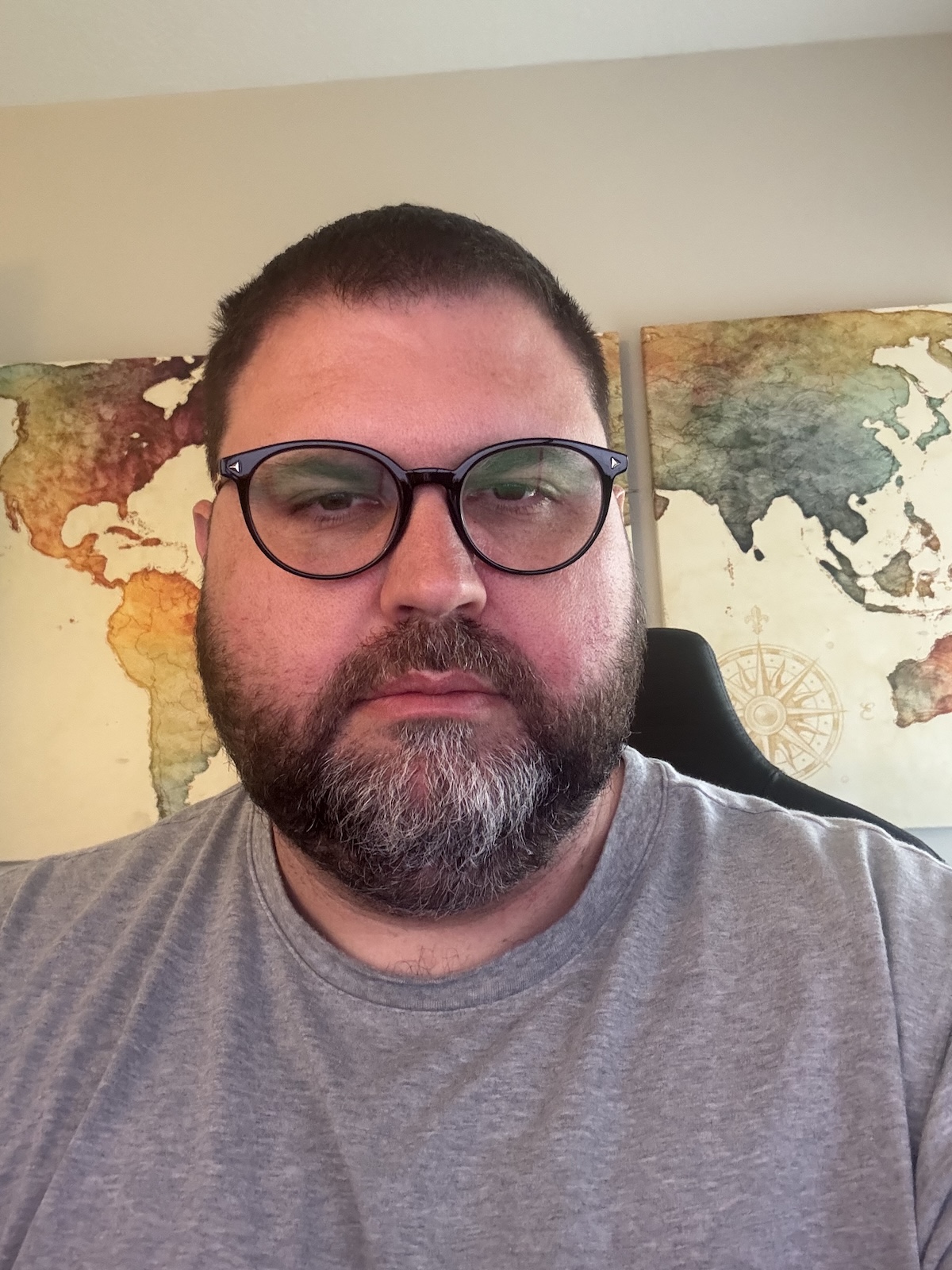
Standing a little over six feet tall and wide-framed, Randy moves with the quiet confidence of someone who knows he’s carrying a legacy. He glances around the café as he wipes his hands on a folded apron, a faint smile tugging at the corner of his mouth—like someone who knows the pressure but welcomes it. He’s not just stepping into ownership—he’s stepping into a story already in motion.
Since its founding in 2018, Ubora has become a local favorite. The reviews don’t lie. Between both locations—Downtown and Evans—they have over 500 glowing Google reviews, and the community’s loyalty speaks volumes.
Now, with Randy at the helm, loyal customers can’t help but wonder: what new flavors, ideas, or traditions might be brewing?
From Athens to Everywhere
Bradum is not a complete stranger. He was born and raised just a few miles down the road in Athens. But his journey from the Classic City to a commission as a Navy Officer, then to Homeland Security, and finally landing in Augusta was anything but linear.
He spent most of his military career crisscrossing the country—Washington State to California, Mississippi to Connecticut—following orders and moving his family through 15 different addresses.
When I asked what his favorite location was, he answered without hesitation, “Seattle.”
It was his time in the Rain City, twenty years ago, where something clicked. “That’s when I got hooked on coffee,” he recalls. “I started to learn that there’s more to the coffee world than Starbucks and Folgers.”
Becoming a Roaster
In 2020, when COVID hit and the world retreated in a way no one had ever seen before, people scrambled to find new hobbies to fill the void left by vanished social connections. For Bradum, already intrigued by coffee’s complexity, the pandemic lockdowns provided both the time and motivation to dive deeper.
In a season defined by uncertainty, roasting coffee gave him a rare sense of control—measuring, timing, adjusting, improving. It was alchemy, and it gave his days much-needed structure.
 Source: Instagram
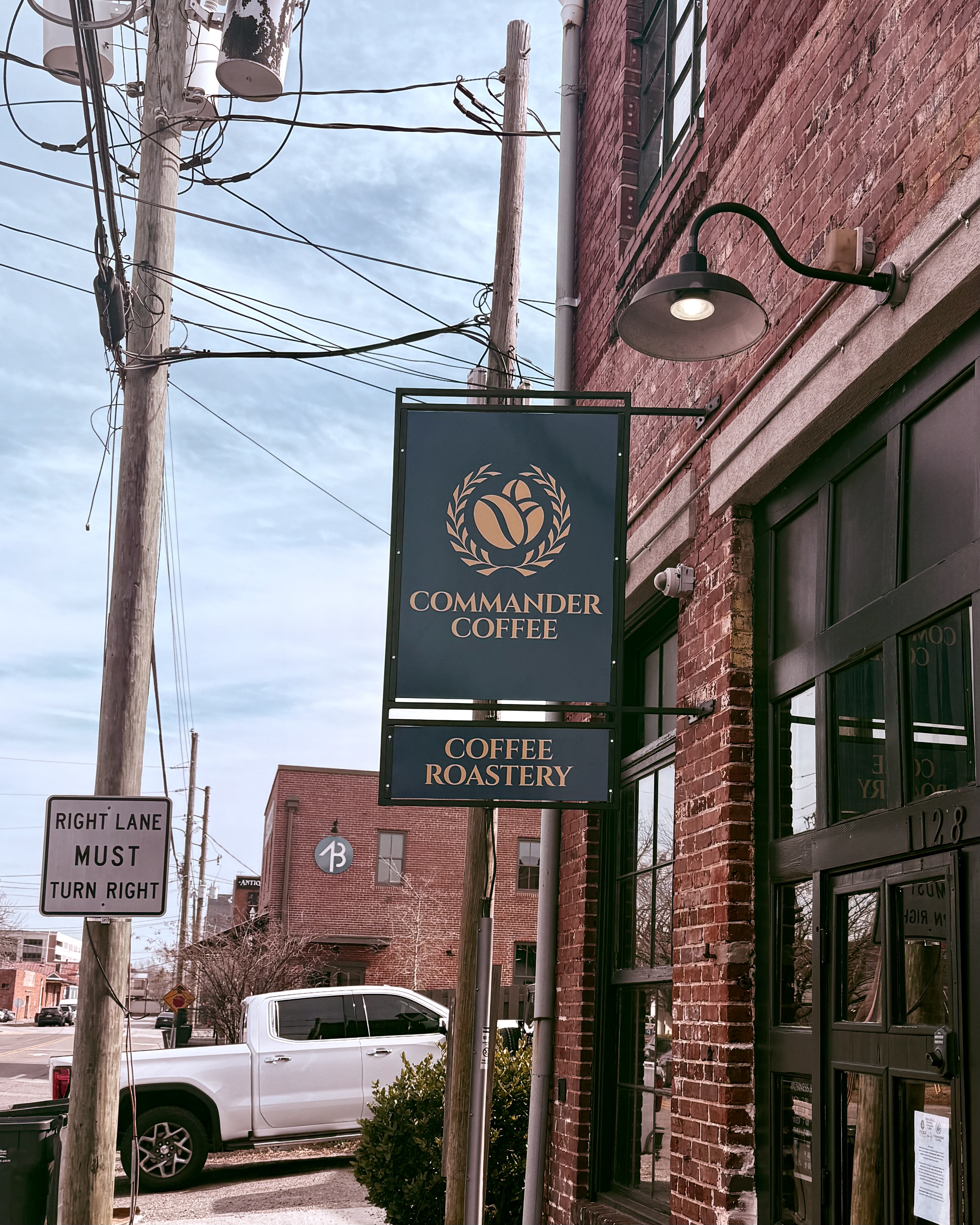
He started small. Purchasing the green beans in modest quantities and burning countless batches on a $100 sweeping tray he found on Amazon. He laughs, remembering those early disasters that filled his Maryland kitchen with smoke and disappointment. But failure taught him precision, and precision became the foundation to what would grow into Commander Coffee.
As his technique improved and his palate developed, Bradum’s hobby took him to the local farmer’s market. Things started slowly—selling 20 to 30 pounds of roasted coffee was considered a good weekend. The real breakthrough came when he partnered with a local retailer that championed locally-owned products.
Word spread through Southern Maryland’s communities. Customers would seek him out online, drawn by the quality and the story behind Commander Coffee. What had begun as a pandemic distraction was becoming something more, leading him to an unexpected destination—Augusta, GA.
The Craft
“Coffee is a craft,” Bradum says, pausing as he points to the small roaster on the counter. Nothing like what he has today, but it was an upgrade from the sweeping tray and accompanied him through his journey. “If you want the same taste of coffee every single sip, this is not it,” he explained with a smile. It’s not from arrogance. It’s the perspective of someone who understands his product and wants to set honest expectations.
He is right. Coffee is like wine. It is complex and very sensitive to its environment. It starts at the plantation. One small change in the environment—more rain, less rain, changes in the barometric pressure, etc.—will alter the flavors fo the final product. That’s what defines roasting as a true craft—it demands precision, patience, and an eye for subtle variation.
The technical side of roasting speaks to Bradum’s engineering background. He describes roasting with the same systematic approach he once applied in his naval career: understanding variables, monitoring data, adjusting for external factors. “Every harvest is different because every harvest is impacted by climate change,” he explains. “Because of that, I try to tell folks that coffee is something to be experienced.”
He isn’t just selling beans—he’s inviting people to slow down, notice, and engage with each cup as a living product of place, time, and technique.
A New Mission — Ubora Coffee
The transition from hobbyist to business owner came through what Bradum calls “being in the right place at the right time.” The previous owner of Ubora, a fellow Navy man, needed to sell when orders took him to DC. At the same time, Bradum was looking to return home to Georgia after his federal career with Homeland Security neared retirement.
“He was looking to sell the business, and I was in D.C. looking to come back to Georgia,” Bradum reflects. “Honestly, it just worked out.”
But Randy isn’t just buying a business; he’s inheriting a mission that aligns perfectly with his own understanding of community. His years at sea and the isolation of the pandemic taught him something valuable about human connection. “I experienced that isolation that a lot of other folks experienced during COVID,” he explains. “And I’m seeing a need for folks to connect.”
The new owner is not running it for the sake of having a business. He sees coffee as a kind of social glue—a way to bridge differences and bring people to the same table. This understanding shapes his vision for Ubora’s future. He talks about hosting roasting classes, collaborating with the Augusta Metro Arts Council, and providing venue space for community groups to meet up. “I want to bring that venue to the community and keep it alive—to bring people together and give them a place away from work, away from school, away from home to just unwind and connect.”
Business Challenges
It is not all roses; Bradum faces a host of external challenges. Locally, Augusta’s parking situation frustrates him—property owners recently closed off lots that customers used to access, making it difficult for people to park nearby.
Aside from the local issues, the coffee industry faces tariff pressures and climate threats to harvests worldwide. But Bradum approaches these obstacles with the same steady resolve that carried him through two decades of military service.
“Green coffee is becoming a target,” Randy says. “We don’t grow much of it here, so we’re at the mercy of global tariffs.” He pulls out a sample of Kona—grown in Hawaii and dramatically more expensive than Brazilian or African coffees. “Pure Kona? Nobody would buy it. It’s that pricey.”
Perhaps most tellingly, he’s learning that his roasting style differs from his predecessor’s, which means Ubora’s flavor profiles may evolve. In a business often built on consistency, this could be risky. But Bradum sees it differently: “I’m curious to see how much that’s going to impact the flavor profiles.”
For now, he is not making any drastic changes to the coffee flavor profiles. Instead, he will rely on customer feedback and see where it takes the business and will “ride the wave of community.”
Conclusion
Every day, Bradum will fire up the roaster. Some days he is alone, other days, he is accompanied by one of his children. He will measure the beans by the grams rather than scoops, and monitor the temperatures with military precision. Yet, a cup of coffee is never served twice because roasting coffee at Ubora is a craft, and the flavors will be slightly different every time.
Outside, the last of the afternoon light fades from Jones Street. The morning rush seems both distant and imminent. In a few hours, Ubora will again fill with the sounds of community—the hiss of steam, the gentle click of ceramic, the quiet conversations that bind people together.
And Randy Bradum will be there, behind the counter, continuing his mission in a new uniform: an apron instead of dress blues, crafting connections one cup at a time.




Comments (0)
No comments yet. Be the first to share your thoughts!
Leave a Comment